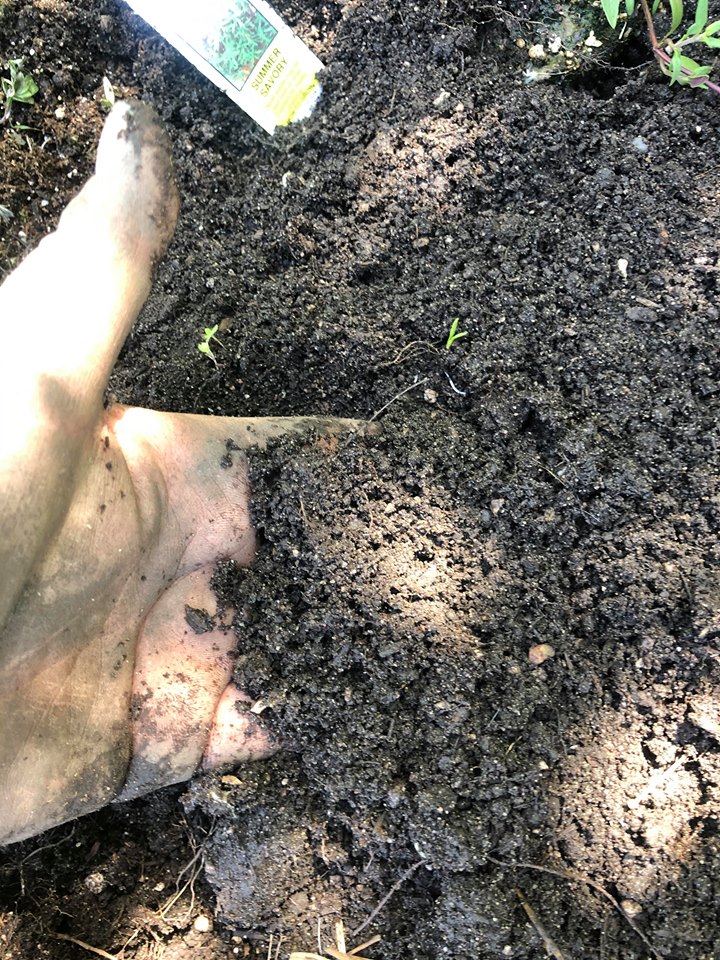
Soil

This is a subject that’s very important for your garden as certain soils and plants will not do well together. Remember to do your research when choosing which plants you will want to grow, as some plants require well-drained soil and other plants will need more water retention.

In Central Alberta we generally have clay or silt, there is not much in between, which means we need to add amendments to the soil.  Amendments can come in many forms; sand, peat moss, compost, perlite, or manure.  All will help to develop long term, excellent soil conditions.

Please note that amendments do not give the plants the NPK (fertilizer) they need, but it helps plants get those nutrients.  So although compost is great for plants, it’s more for amending the soil to give it the conditions required for plants to get those extra nutrients vs. just giving the nutrients itself.
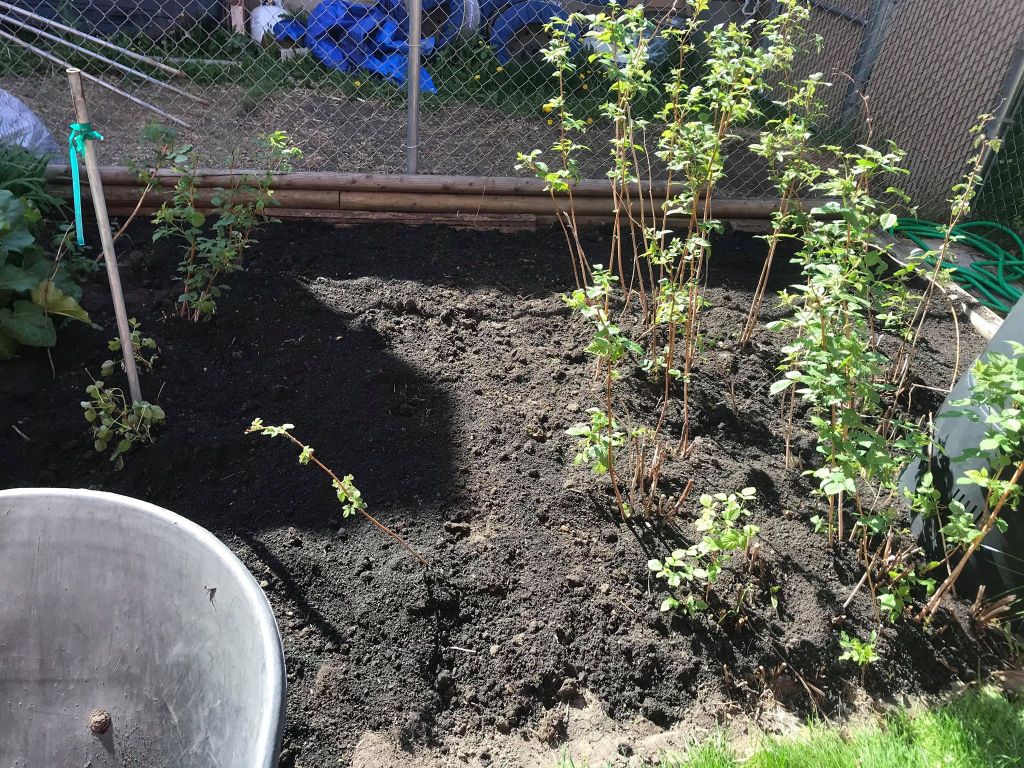
Compost added to a raspberry patch
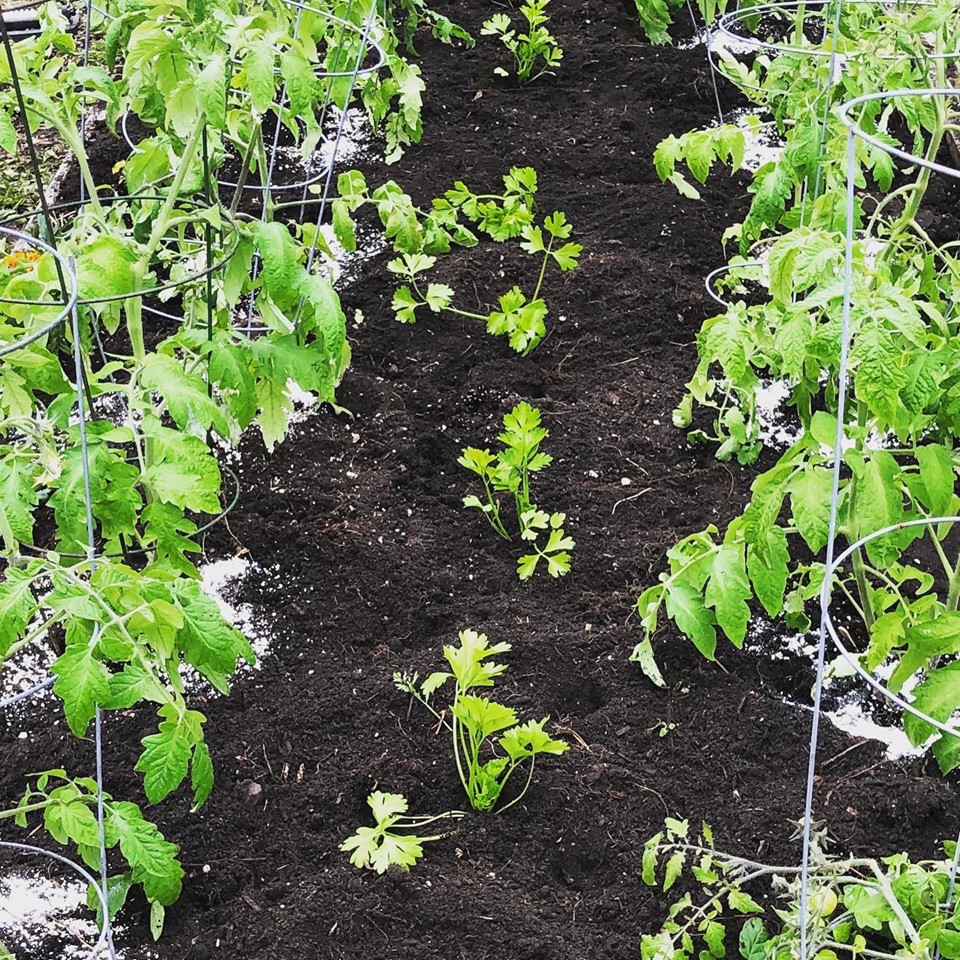
Celery in amended garden soil

So, you have clay, what will help?

Let us look at the long-term goal of the soil development.  Ideally you want soil that can allow air circulation but will also hold and drain moisture.  Sometimes this just means digging out and starting fresh with a new mix of soil, other times that will mean adding to current soil to increase the desirable conditions.

Clay will hold water, but it is also very hard to dig in. Adding sand and compost/manure will help to loosen it up.  Whereas silt, just by adding compost/manure, will help to give it density, and peat moss will help with water retention.

Learn what your soil is like now and then research ways that you can increase or benefit it for your plant’s growth.  This is not the same as pH (measurement of how acidic/basic water is), as that is a whole different topic, but this will get you to a point where you can then balance your pH levels in the soil.
Weeds

You either tolerate them and learn to live with them or you hate them. There is not much genuine love for weeds.

From invasive to perennial to simple seedlings, we all get weeds and have to learn how best to deal with them even if it means letting them be.

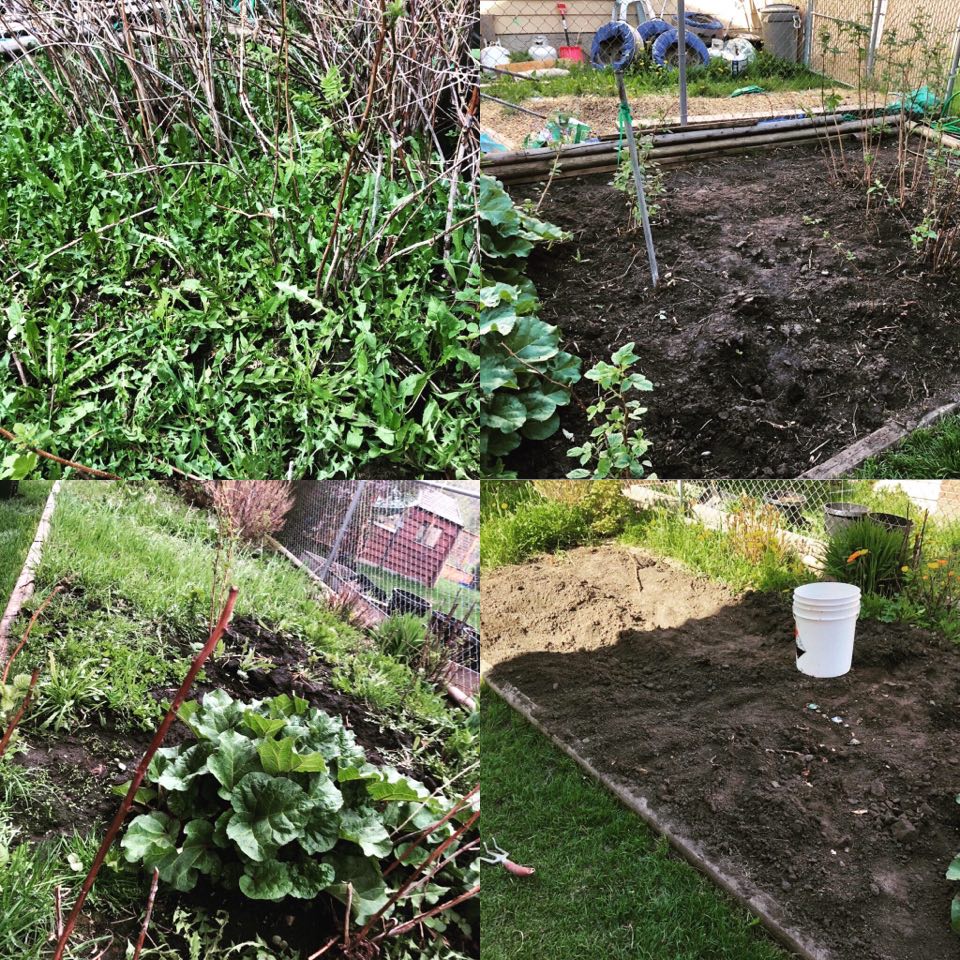
A garden over run in weeds!

Here are my top 5 weeds that I have dealt with;

  1. Quackgrass goes by many names, they’ve been called “Devils Weed”, “Couch Grass” to name just a couple.  This weed is the bane of any gardener be experienced or not. There is always one war that’s consistent in any garden, and that is the war to keep this weed at bay. When dealing with Quackgrass, it is best to have patience! Slowly pull the weed, being sure to get as much of the root as possible.  Even the smallest piece that may have been left in the ground will create more Quackgrass to spread
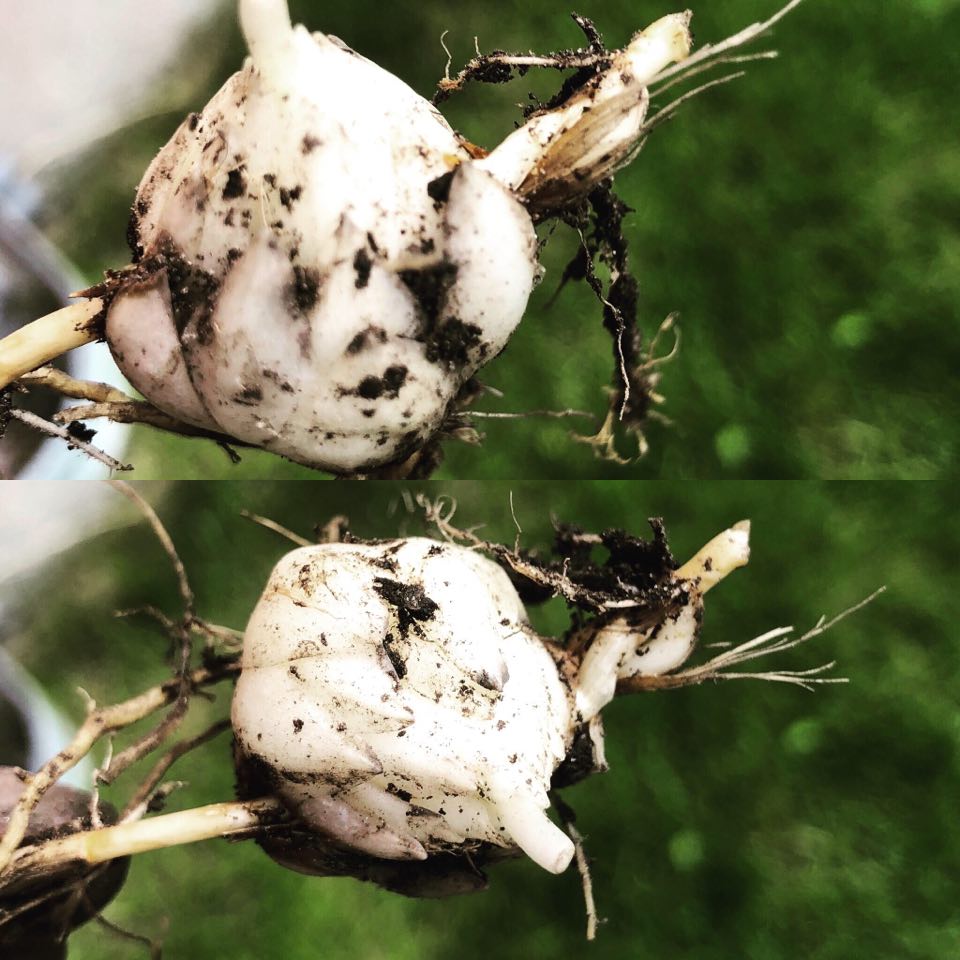
Quackgrass growing threw a flower bulb
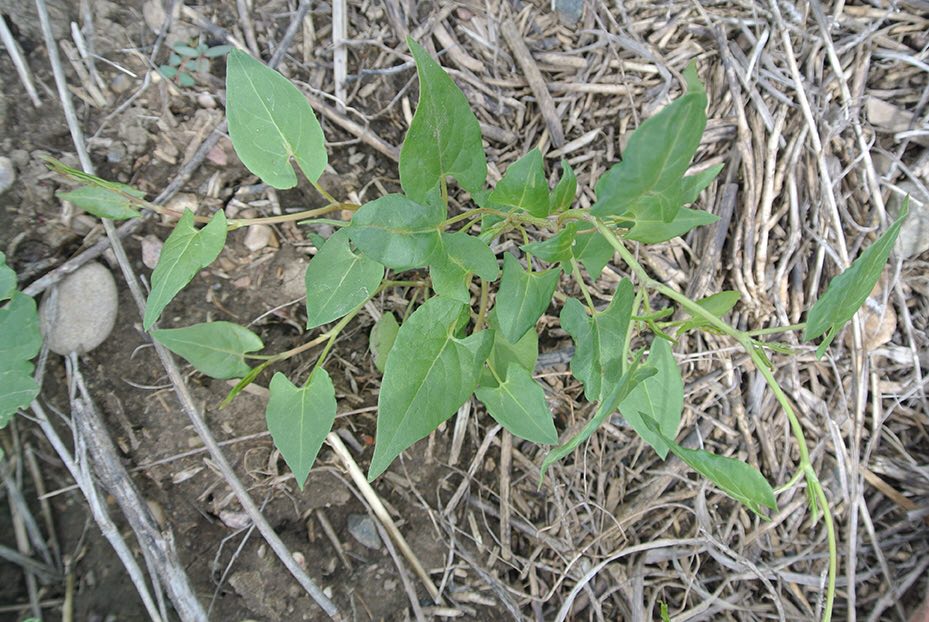
Bindweed
  1. Bindweed is an invasive weed, which is a classification with Alberta Agriculture. This weed is another bane of gardeners, as it is a vine and will wrap around your plants, so not so much fun to untangle.  This one I only have dealt with occasionally, but another you must ensure that you remove as much of the root as possible.  Because of the aggressive nature of this weed, it will take many seasons to fully deal with.
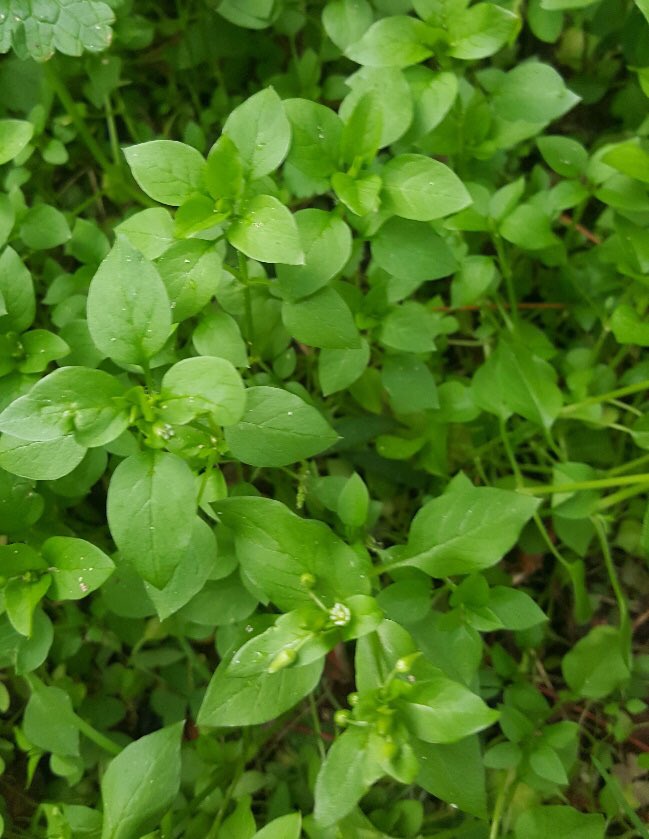
  1. Chickweed.  This is one you have to be more diligent about pulling, but don’t throw it out as you can eat this!  It is great in smoothies or as an extra green for your salads.  It is now considered a high nutrient super plant!
Chickweed
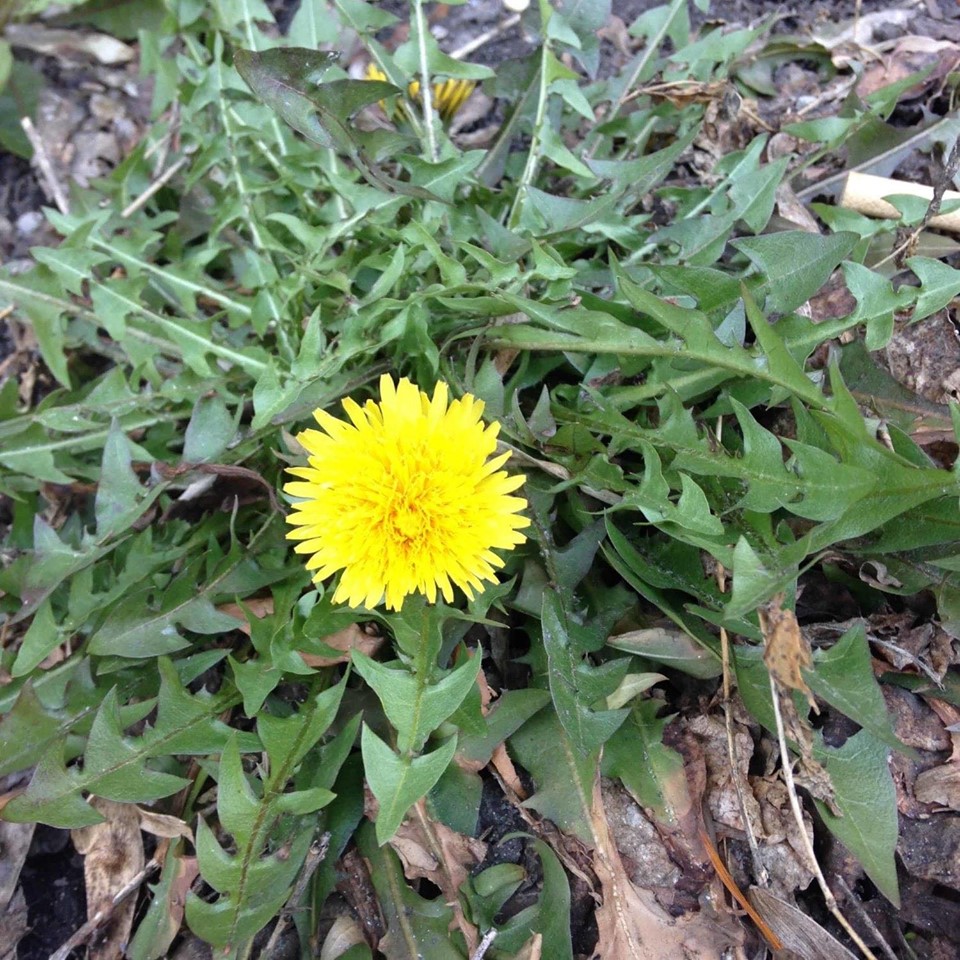
Dandelion
  1. Dandelions, with roots that can go on forever!  They will regrow from a broken stem left in the ground, so another weed to ensure you remove as much of the root as possible.  But this is a weed that also has its own place in the yard. It’s the first flower for the bees (which are the best pollinators for your plants), plus you can make a delicious tea from either the roots or the leaves.  It is also great for making a fertilizer!
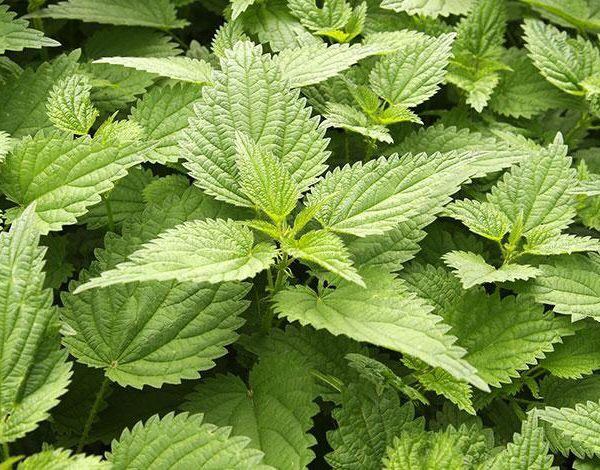
  1. Stinging Nettle, though easy to pull you should wear gloves as some are allergic to this weed.  Pull by the root and either discard or use in a tea!
Stinging Nettle

There are many more weeds like horsetail and thistles, and many more plants that are invasive as well.  It is recommended when buying new perennials to do your research and ensure they will not take over, not just your yard, but also to your neighbor’s yard.

Vegetable Container Gardening

Let us talk about Vegetable Containers!

First there’s lots of information out there on do’s and don’ts of container gardening, let’s start by ignoring this!

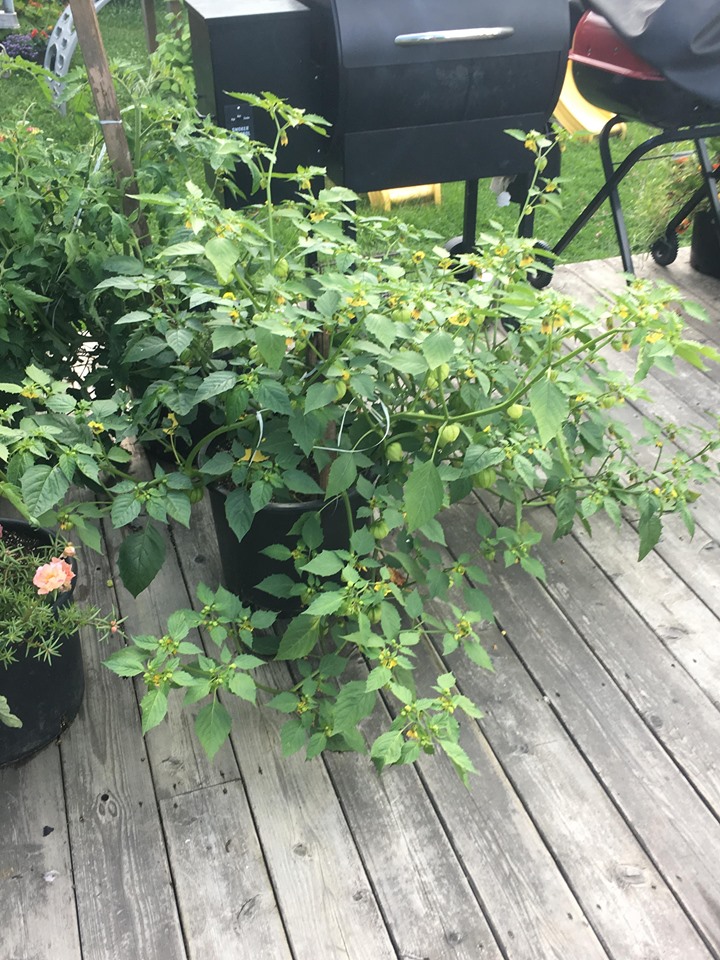
Whatever you want to grow can be grown in a container and, in fact, they’re now breeding plants specifically for containers to make this easier. I have grown giant Sun Gold Tomatoes in a 5-gallon pot and put jalapeno peppers in a 2-gallon pot, so it’s very possible to grow anything you want in a container.  The limit is on you for what you can handle, for watering, fertilizing, and care.

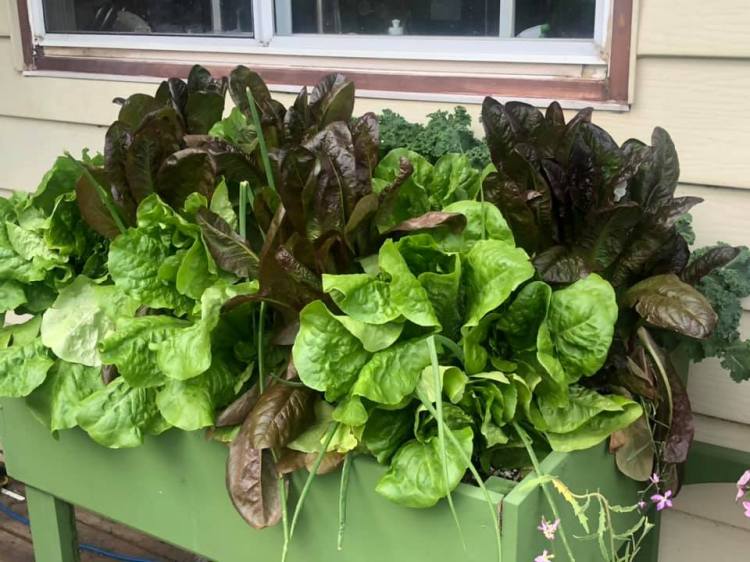
Container gardens should be a must and include everything from half barrels to your basic 2-gallon pot from the local greenhouse.  They are easy to add around your deck or balcony, and they also blend in nicely with your garden.  It’s a superb way to get mint around your cabbage, but not have it take over!

So how do we do this?  First things first, let’s start by using the right potting soil and/or mix!  There are definitely ways to do this cheaply and help save costs by reusing 50% of what you already have and topping it up with fresh potting soil.  Even a simple mix of topsoil, compost, and potting soil will work.  What it will come down to is how often you will need to water!

Next is to decide what you want to grow. The sky is the limit, really.  I have grown everything from indeterminate tomatoes to cucumbers and peas in baskets and containers.  Add some flowers/ companion plants to help attract the pollinators and then just be persistent with your watering.

Notice I mention watering a lot in this section, that’s because containers dry out a lot faster, so they need water more often.  I have had years when I easily spent 3 hours a day watering, but I also go big on this side of gardening to increase our food production. What consistent watering means is that you don’t want to drench the container, but you don’t want it too dry either, so this takes some practice!  One of the easiest ways to tell if a container needs water is by feeling down into the soil.  You do not want your plants saturated at all, as you will only kill them just like if you let them dry out too often.  These will only cause issues/stress for the plants and potentially leads to other things like bugs.

Let us work together and help make the garden produce for you!

Reasons to start your own garden

At the beginning of 2020, the world was hit with a Global Pandemic known as Covid-19. The world went into chaos, the economy took an enormous hit, people started hoarding food, depleting shelves in grocery stores. Of all the reasons to have your own garden, this became more clear during this crisis.

If you have kids, the schools closed, and it canceled all sports. If your place of work & they deemed your job non-essential, it sent home you and the business had to shut down during the pandemic. Whereas, If they deem you an essential service, I cannot thank you enough! When the world needed you, you stepped up to the plate even with the stress of not knowing what could happen next. So why should you consider gardening this season?

Here are some of my reasons!

Gardening is therapeutic! With the stress of life and lack of control in the world around you, it is nice to sit back in your yard and enjoy the simpler things in life. It is a fact that having your hands in the dirt helps bring pure pleasure, or when you harvest that first cherry tomato to eat, it is a complete treat. Add in the fresh air, the smell of the flowers, and a meal from vegetables you grew yourself, there is a connection there that helps revive the soul.

Growing your own is rewarding!

Right from the start, the joy of choosing the seeds and/or plants you want to grow makes springtime more exciting. Just waiting and looking forward to the lush flowers that you will grow or the potatoes you store for the winter months, is a joy. Then it turns into the Summer months when the sun is shining and you get to enjoy the fruits of your labor. Finally, it’s Fall, you can begin harvesting your plants. You can start canning, freezing, pickling, and/or storing what you grew for yourself and others. This is the time when having your own garden makes it all worthwhile.

Control over what you will grow and how you will grow it.

Today’s world is ever changing, and what we eat is now becoming more important, as is what we use to grow plants with. Everything from what soil you will use, to fertilizers and even the plants you purchase, you can have as much or as little control as you want.

Money savings!

This is a big area for some and not so much for others. The more vegetables you plant, the less you will need to buy from the store. For some this could be canning/freezing come fall or long-term storage, while for others it could be as simple as not buying lettuce for a while. Once you garden, you will realize the many benefits that growing your own produce provides.

Whichever way you choose to garden, it will not disappoint you. I look forward to the months ahead, not just to keep me busy, but also waiting in anticipation for that first salad out of my garden.

It’s because of my love for gardening that I wanted to start this blog. I’m hoping to provide help & guidance to first time gardeners, or to just answer your questions. The long-term goal is to help someone be a little more self-sufficient!

#community #summer2020 #growingyourown

It’s Gardening Time

Now that you’re ready to start your first garden, there are a few things you must consider. One of the most important is the area.  You want to choose an area that will give you the best exposure for growing your vegetables.

No need to fret if you don’t have a lot of space.  Nowadays there is no limit to what you can use to grow your vegetables in, there are lots of unique types of containers that you can use.  You also do not need to spend a lot of money on containers, heck you could even use an old rain barrel cut length ways, or a food-grade bucket.  Use creativity, because a lot of stuff would work just fine!  This is also a great way to repurpose, reuse, and recycle too.

Gardening

When choosing a suitable area, a couple of tips to follow are:

1.  Most vegetables need at least 6 hours of direct sunlight per day.  There are a few vegetables that can tolerate some shade, but not many.

2.  Water pools, so try to plant in a moist, well-drained soil.  Planting in raised beds is ideal for this purpose.

3.  High winds can play havoc on plants, so try to avoid planting in areas that have strong winds. 

Next is to make a list of what you want to grow, and what you will eat.  Now you will be able to see if the space you want to use is adequate for the plants you want to grow.  If you only want to grow greens, you will want a morning sun only.  If you want to grow tomato or peppers, you will want full sun all day long. If you want to grow both, go for it! This could be accomplished by creating shade areas with the bigger plants that like full sun.  An example of this is, I grow my celery in between my tomatoes or lettuce under my cucumbers that trellis above.

Mainly have fun with gardening!

Companion Planting

What is Companion Planting?

Companion Planting is planting crops together to not only support the growth of the plants but also to help protect your plants from certain pests and diseases.

By planting onions and mint around your brassica, you will naturally help deter cabbage moths. Basil is not just for your pasta sauce but will also help improve the growth and flavor of your tomatoes. Then you have the “three sisters” garden with corn, squash, and beans. Each working together to benefit the other, in not just protection but also in the nutrients in the soil bed itself.

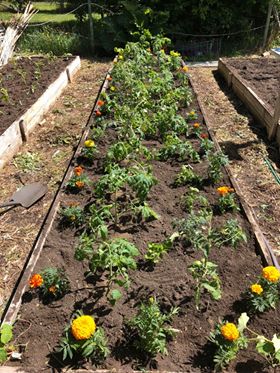
I like to plant flowers throughout my garden, not just because I enjoy them, but they also attract pollinators and many predator insects that we need in order for our crops to grow.  It’s important to use plants that complement each other in nature, as they work together.  Flowers play an important role in companion planting, as they offer your plants protection from many pests.  We consider marigolds to be the flower of choice with many gardeners for that very reason.

There is a lot of information on companion planting, what works and does not together, but don’t let it overwhelm you either. Start with a list of the plants you want to grow and the area you have for them, even if it just containers. Group them together with what works or helps, you will see fast that you will get a few distinct groups.

I helped a friend a few weeks ago design her new raised beds. With a list of the plants she wanted to grow and knowing her bed’s layout, I could create a functioning design for her with companion planting in mind. It ended with 3 different beds; a tomato bed, a potato bed, and a pea bed. Then she could mix in the rest of her selection in amongst those three primary crops and adding additional plants like nasturtiums and marigolds.

Now that you know why you want to try companion planting, head over to West Coast Seeds for a more in-depth breakdown of each type of plant and what it will work well with or not! If you need more help or advice, contact me today!